Why Accumulation Pays for Itself: Decoupling Your Packaging Line
Every short stop on one machine ripples down the whole line. An accumulation buffer breaks that chain. Here's how decoupling works and how to tell if it's worth the money.
LineIQ Team2 min read

On a tightly coupled packaging line, every machine is only as available as the machines around it. When the filler jams for 90 seconds, the capper starves, the labeler starves, and the case packer starves. One small stop becomes a line-wide stop.
Accumulation changes that. A buffer between two machines lets each side keep running through the other side's short stops. That's what we mean by decoupling.
The problem with a coupled line
On a line with no buffers, the availabilities multiply. Four machines that are each 95% available don't give you a 95% line:
| Machines | Each machine available | Line available |
|---|---|---|
| 1 | 95% | 95.0% |
| 2 | 95% | 90.3% |
| 3 | 95% | 85.7% |
| 4 | 95% | 81.5% |
Nothing in that table is broken. Every machine is doing its job. The line loses close to a fifth of its time because each stop gets passed along to the others.
What a buffer actually does
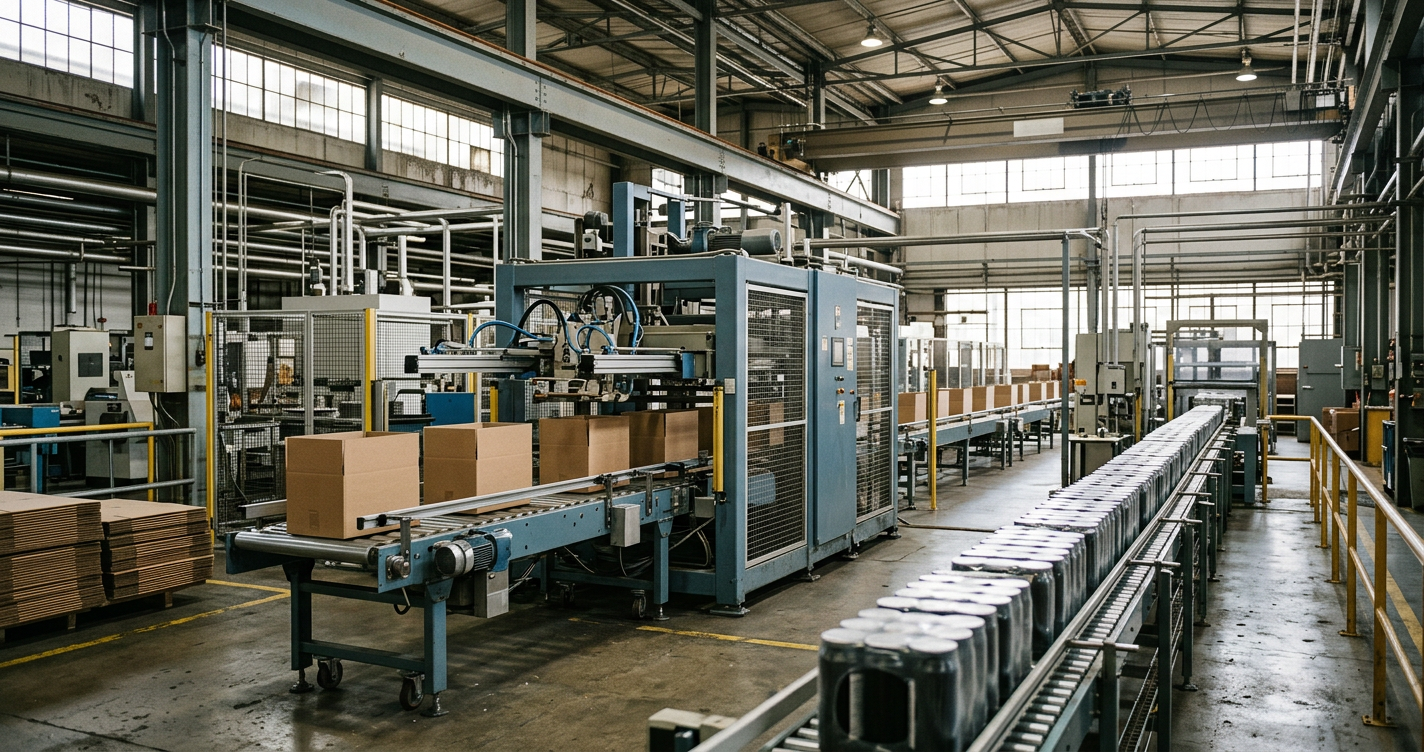
An accumulator holds a few minutes of product between two machines. When the downstream machine stops, the upstream one keeps filling the buffer. When the upstream machine stops, the downstream one keeps drawing from it.
As long as a stop is shorter than the buffer, the other side never notices. So the size of the buffer matters a lot:
- Too small, and it fills (or empties) before most stops are over.
- Sized to your typical stop length, and it absorbs most of them.
- Much larger than that, and you're paying for floor space and product-in-process that rarely gets used.
Where to put it
A buffer helps most next to the machines that stop most often. A common choice is just upstream of the bottleneck, so a stop further up the line doesn't starve the constraint. Every minute the bottleneck sits idle is a minute of output the whole line never gets back.
That's not always the right spot, though. It depends on where the stops happen and how long they last. Comparing every possible placement is easier than guessing.
Is it worth it?
The payback math is simple once you know the throughput gain:
- Work out how many extra good products per day the buffer makes possible.
- Multiply by your margin per product to get the extra profit per day.
- Divide the installed cost by that daily profit to get the payback in days.
The hard part is step one, and that's where a model of your own line beats a rule of thumb.
Try it on your line
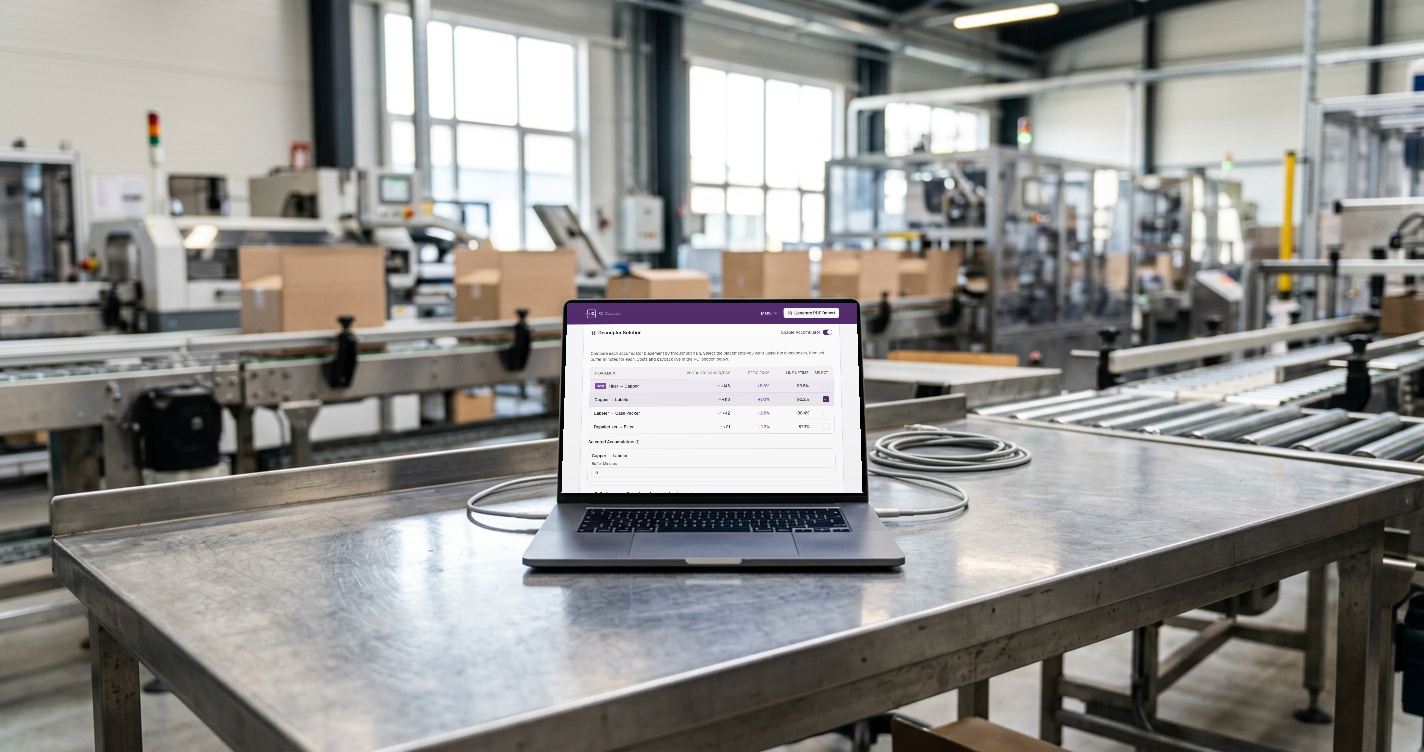
The LineIQ calculator compares every accumulator placement on your line side by side. It shows the products gained per day, the efficiency gain, and the resulting line uptime for each one, then works out payback from the investment you enter.